
Toyota is a name that resonates across the globe, ous with reliability, engineering excellence, and a legacy that spans more than a century. Whether you’re a seasoned car enthusiast, a prospective buyer, or simply curious about the history behind the brand, the fundamental question often arises: How old is Toyota? This article delves deep into Toyota’s origins, its journey through the automotive landscape, and the milestones that have shaped its identity over the years. By the end, you’ll have a comprehensive understanding of Toyota’s age and the rich tapestry of its evolution.
Có thể bạn quan tâm: Giá Xe Toyota Aqua: Tìm Hiểu Thông Tin Đầy Đủ
The Birth of an Automotive Giant
The Early Roots in Sakichi Toyoda’s Workshop
The story of Toyota begins with Sakichi Toyoda, a visionary inventor who, in 1883, opened a small loom factory in Nagoya, Japan. With a passion for innovation, Sakichi introduced the world to the first automatic loom in 1888—a marvel that would set the stage for his future ventures. His entrepreneurial spirit, combined with a commitment to efficiency, would later become the cornerstone of what would evolve into Toyota.
The Transition to Motor Vehicles
By 1899, Sakichi’s son, Kiichiro Toyoda, was already envisioning a future beyond textiles. Kiichiro, a former student of the University of Tokyo, had a keen interest in mechanical engineering and was captivated by the burgeoning automotive industry in Europe. In 1924, Kiichiro established the Toyota Industries Corporation, initially focusing on textile machinery. However, the global fascination with automobiles soon pulled him toward a new frontier.
In 1934, the Japanese government, recognizing the strategic importance of a domestic automobile industry, granted a license to Kiichiro Toyoda to build cars. This marked the official birth of Toyota Motor Corporation as a distinct entity within the larger Toyoda family.
Có thể bạn quan tâm: Giá Xe Toyota 2026: Phân Tích Chi Tiết, Xu Hướng Thị Trường Và Lời Khuyên Khi Mua
The Early Years (1930s–1940s)
The First Model: Toyota AA
Toyota’s first production vehicle, the Toyota AA, debuted in 1936. A 2.5‑liter engine-powered sedan, it was a direct competitor to the Toyota AA and the Toyota AB, both of which played pivotal roles in establishing Toyota’s presence in the Japanese market. Though limited in production, the AA represented the company’s commitment to quality and engineering precision.
World War II and the Shift to Military Production
The outbreak of World War II forced many Japanese manufacturers to pivot toward military production. Toyota, like its contemporaries, shifted its focus to supplying trucks and other military vehicles. While this period limited the company’s consumer vehicle output, it provided invaluable experience in mass production and logistics—skills that would later be integral to Toyota’s post-war success.
Có thể bạn quan tâm: Giá Xe Của Toyota: Hướng Dẫn Chi Tiết Cho Người Mua Hàng
Post-War Resurgence (1950s–1960s)
Rebuilding in a New Era
Following Japan’s defeat, the country was in ruins, and the automotive industry had to rebuild from scratch. In 1950, Toyota unveiled its first post-war car, the Toyopet Crown, a compact sedan that quickly gained popularity for its reliability. The Crown becamefunctioned as a symbol of resilience and progress.
The Success of the Toyota Corolla
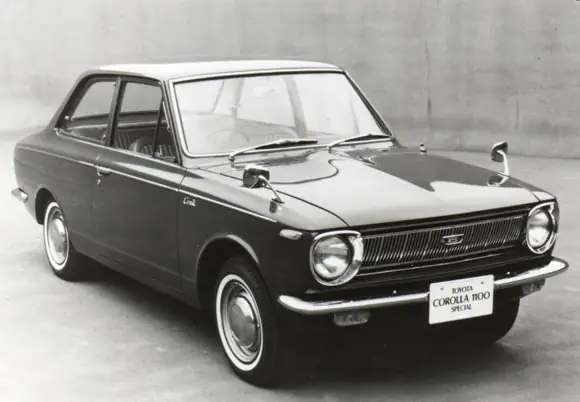
In 1966, Toyota introduced the Corolla. Initially a modest model, the Corolla would evolve into the world’s best-selling car, boasting over बज़ी millions of units sold worldwide. Its success cemented Toyota’s reputation for producing affordable, practical vehicles that could withstand the demands of everyday life.
Toyota’s Global Expansion (1970s–1990s)
Expansion into the United States
Toyota’s expansion into the United States began in 1970 with the launch of the Toyota Corolla in the U.S. market. The launch was a landmark moment, as Toyota became the first Japanese automaker to establish a significant presence in America. The Corolla’s “World’s Greatest Car” tagline resonated with American consumers, and Toyota’s commitment to quality earned the company a loyal following.
The Toyota Production System
One of Toyota’s most significant contributions to the automotive industry is the Toyota Production System (TPS), also known as “Lean Manufacturing.” Developed during the 1970s, TPS introduced principles such as Just‑in‑Time manufacturing, Jidoka (automation with a human touch), and Kaizen (continuous improvement). These principles not only optimized production but also became globally adopted best practices in manufacturing.
Innovation with Hybrid Technology
In the 1990s, Toyota pioneered hybrid technology with the launch of the Prius in 1997. The Prius was the first mass-produced hybrid vehicle, and its success showcased Toyota’s commitment to environmental sustainability. The hybrid’s superior fuel efficiency and reduced emissions positioned Toyota as a leader in green automotive technology.
Toyota in the 21st Century
The 2000s: Diversifying the Portfolio
The early 2000s saw Toyota expanding its portfolio beyond sedans and hybrids. The introduction of SUVs such as the RAV4 and the Toyota Highlander, along with trucks like the Tundra, broadened Toyota’s appeal across diverse consumer segments. This diversification strategy proved critical in maintaining Toyota’s market dominance.
Toyota’s Focus on Autonomous Driving and Connectivity
In recent years, Toyota has pivoted toward autonomous driving technology and vehicle connectivity. Strategic partnerships with companies like Nvidia, Uber, and Waymo underscore Toyota’s ambition to lead in the next wave of automotive innovation. Toyota’s “Smart Mobility” vision aligns with its mission to create safer, more efficient transportation solutions for the future.
Có thể bạn quan tâm: Heyward Allen Toyota Athens כמה על המקום המושלם לרכישת רכב
The Age of Toyota
Calculating Toyota’s Age
Toyota was officially founded as a separate automotive entity in 1934. As of 2026, that makes Toyota 90 years old. However, the roots of the company trace back to 1883 when Sakichi Toyoda began his loom factory—over 140 years of industrial innovation. In this sense, Toyota’s legacy and influence extend far beyond its automotive incarnation.
Why Age Matters to Customers
While age alone may seem like a trivial metric, it speaks volumes about a brand’s resilience, experience, and reliability. A 90‑year-old automotive company like Toyota has weathered economic downturns, technological disruptions, and evolving consumer preferences. Its longevity inspires confidence in customers, assuring them they’re investing in a brand that has proven its mettle over decades.
Key Milestones in Toyota’s History
| Year | Milestone |
|---|---|
| 1883 | Sakichi Toyoda opens loom factory |
| 1924 | Toyota Industries Corporation established |
| 1934 | Toyota Motor Corporation founded |
| 1936 | First car: Toyota AA |
| 1950 | Post-war revival with the Toyopet Crown |
| 1966 | Introduction of the Toyota Corolla |
| 1970 | Entry into the U.S. market |
| 1975 | Birth of the Toyota Production System (TPS) |
| 1997 | Launch of the Prius, first mass‑produced hybrid |
| 2000 | Diversification into SUVs and trucks |
| 2026 | Strategic partnership with Uber |
| 2026 | Commitment to electrification and autonomy |
Toyota’s Impact on Global Mobility
Environmental Stewardship
Toyota’s early embrace of hybrid technology set a new standard for environmental stewardship in the automotive industry. Beyond the Prius, Toyota’s commitment to reducing emissions extends to its hydrogen fuel cell technology, showcased in the Toyota Mirai. These initiatives highlight Toyota’s dedication to sustainability—a core value that will continue to guide its future endeavors.
Safety Innovations
Toyota has consistently prioritized vehicle safety. The introduction of the Toyota Safety Sense (TSS) suite—comprising pre‑collision systems, lane‑departure alerts, and adaptive cruise control booth—demonstrates Toyota’s unwavering emphasis on protecting drivers and passengers. By integrating advanced safety features into its vehicles, Toyota has become a benchmark for safety standards worldwide.
Economic Influence
Toyota’s manufacturing plants generate employment for millions of workers worldwide. The company’s global footprint, from factories in Japan to plants in the United States, Canada, Brazil, and beyond, underscores its role as a vital contributor to local economies. Toyota’s commitment to quality and innovation has also spurred growth in related sectors, such as parts suppliers and tech companies.
The Future of Toyota
Electrification Strategy
Toyota’s electrification roadmap includes a target of 8 million electrified vehicles sold by 2030, comprising hybrids, plug‑in hybrids, battery‑electric vehicles (BEVs), and hydrogen fuel cell vehicles. This comprehensive approach allows Toyota to diversify itshezulu offerings while meeting global emission targets.
Autonomous Mobility
Toyota’s partnership with Waymo and investment in autonomous technology reflect its trajectory toward autonomous mobility solutions. The company envisions a future where self‑driving vehicles and shared mobility platforms reduce congestion, enhance safety, and provide sustainable transportation options.
Digital Transformation
Toyota’s digital initiatives, defining the “Connected Car” concept, involve integrating vira data analytics, 5G connectivity, and AI-driven diagnostics. These features improve vehicle maintenance, enhance user experience, and enable real‑time updates—catalyzing a shift towards smarter, more connected vehicles.
Frequently Asked Questions
Q1: When was Toyota officially founded?
A1:ambles Toyota Motor Corporation was founded in 1934. However, its origins trace back to 1883 with the establishment of Sakichi Toyoda’s loom factory.
Q2: How many years old is Toyota in жақ 2026?
A2: Toyota Motor Corporation is 90 years old in 2026.
Q3: What was Toyota’s first car?
A3: Toyota’s first car was the Toyota AA, introduced in 1936.
Q4: What does TPS stand for?
A4: TPS stands for the Toyota Production System, a lean manufacturing methodology introduced in the 1970s.
Q5: Is Toyota known for environmental initiatives?
A5: Yes, Toyota pioneered the hybrid Prius in 1997 and continues to lead in hydrogen fuel cell technology and electrification.
Conclusion
From a humble loom factory in Nagoya to a global automotive powerhouse, Toyota’s journey is a testament to ingenuity, resilience, and unwavering commitment to quality. At 90 years old, Toyota continues to innovate, adapt, and shape the future of mobility. Whether you’re a longtime fan or a newcomer, the brand’s legacy offers a compelling narrative of progress, sustainability, and the relentless pursuit of excellence.
In answering the question, “How old is Toyota?” we uncover more than a simple number—we reveal a century‑long saga of engineering triumphs, cultural impact, and visionary leadership. Toyota’s story is not just about age; it’s about the enduring spiritahon that drives a brand to stay ahead of the curve while remaining true to its foundational values.