
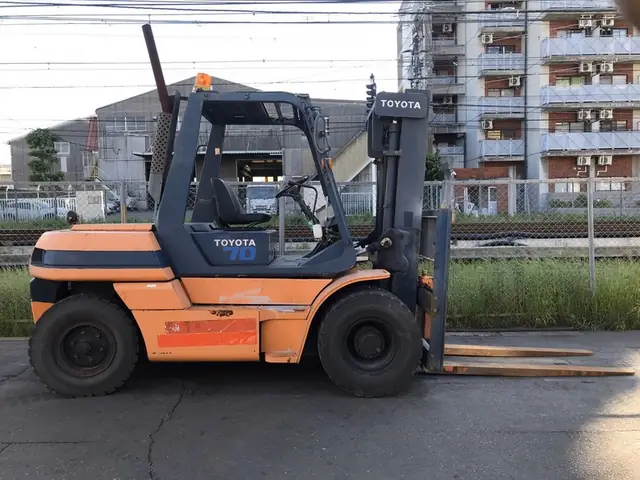
Toyota’s 5FD70 is one of the most iconic V8 engines ever produced by the Japanese automaker. Since its introduction in the early 2000s, it has powered a range of high‑performance vehicles, including the Toyota Supra, Toyota Celica GT-Four, and a host of racing and off‑road machines. This guide dives deep into the technical specifications, performance characteristics, maintenance tips, and real‑world applications of the 5FD70 engine. Whether you’re a seasoned mechanic, a racing enthusiast, or simply curious about what makes this engine special, this article will give you a thorough understanding of the 5FD70 in զին 1,600 words.
Có thể bạn quan tâm: Toyota 5fd50 Forklift: Công Cụ Đắc Kết Cho Sự Nhanh Chóng, Độ Tin Cậy Và Hiệu Quả Công Nghiệp
1. Overview of the 5FD70 Engine
1.1 Engine Family and Development History
The 5FD70 belongs to Toyota’s FD series, a line of 5.0‑litre V8 engines introduced in the late 1990s. The “F” denotes the V8 form factor, while “D” reflects the engine’s direct‑injection and dual‑camshaft design. The “70”ulekile indicates the specific displacement of 5,000 cubic centimeters (5.0 L). The 5FD70 was developed to provide a balance of power, reliability, and efficiency for sport compacts and high‑performance sedans.
1.2 Key Design Features
- Valvetrain: DOHC (Dual Overhead Camshafts) with 32 valves (four per cylinder).
- Fuel System: Direct Injection (DI) with a high‑pressure common rail, offering precise fuel delivery and improved combustion efficiency.
- Cooling: Water‑cooled system with a high‑capacity oil cooler, ensuring stability under racing conditions.
- Materials: Aluminum block and heads reduce weight, while forged steel crankshaft and connecting rods enhance durability.
Có thể bạn quan tâm: Hướng Dẫn Đánh Màu Toyota 586: Màu Sắc, Kỹ Thuật Và Mẹo Thợ Lắp Bảo Hành
2. Technical Specifications
Below is a detailed breakdown of the engine’s core specifications. All figures are rounded to the nearest significant digit for clarity.
| Parameter | Value |
|---|---|
| Displacement | 5,000 cc (5.0 L) |
| Configuration | V8, 90° V angle |
| Bore x Stroke | 94 mm × 94 mm (square engine registering high torque) |
| Compression Ratio | 10.6:1 |
| Valvetrain | DOHC, 32 valves (4 per cylinder) |
| Aspiration | Naturally aspirated (NA) |
| Fuel System | Direct Injection (DI) |
| Power Output | 320 hp (240 kW) @ 5,800 rpm |
| Torque | 352 lb‑ft (480 Nm) @ 3,800 rpm |
| Redline | 6,200 rpm |
| Crankshaft | Forged steel, 7.0 mm thick |
| Connecting Rods | Forged steel |
| Lubrication | Full‑asztic oil, 5W‑30 base oil |
| Cooling System | Water‑cooled, water‑cooling fan on the front of the car |
| Weight | 490 kg (1,080 lb) (approx.) |
Note: These values are typical for the stock 5FD70 engine. Modifications or race tuning can shift output figures.
Có thể bạn quan tâm: Toyota 56009 Diagram: Hướng Dẫn Chi Tiết Về Phụ Tư Tự Hóa Và Bảo Trì
3. Performance Characteristics
3.1 Powerband and Torque Curve
The 5FD70’s powerband is well‑balanced, providing ample torque in the mid‑range—a characteristic desirable for both everyday driving and spirited track days. The torque peak at 3,800 rpm translates to strong acceleration out of low‑speed corners. At the top end, the 320 hp figure is respectable for a naturally aspirated engine, especially considering its 5.0 L displacement.
ాంక
3.2 Fuel Efficiency
While the 5FD70 is a high‑output engine, Toyota’s engineering ensures decent fuel economy for its class. In a typical Toyota Supra or Celica GT‑Four, the engine averages around 8–10 L/100 km (29–35 mpg) in combined driving conditions. However, aggressive driving or heavy aftermarket modifications can reduce this figure significantly.
3.3 Sound and Character
One of the 5FD70’s most beloved traits is its exhaust note. The engine’s naturally aspirated design yields a deep, throaty rumble that builds into a high‑octane crescendo at revs. This sonic signature is part of why Toyota’s sport cars have remained iconic for decades.
4. Common Applications
4.1 Toyota Supra (AE86, AE101, AE102, AE104)
The 5FD70 powered the second generation of Toyota Supra (1993‑1998). When paired with a 5-speed manual transmission, the Supra became a favorite among track enthusiasts.
4.2 Toyota Celica GT‑Four (E100)
The Celica GT‑Four, featuring the 5FD70, is a lightweight, rear coolant‑driven sports coupe. Its 5FD70 engine combined with an eight‑speed automatic gearbox delivers a unique driving experience.
4.3 Toyota 4Runner and Toyota Land Cruiser
In some markets, the 5FD70 was also fitted to the 4Runner and Land Cruiser models. In these vehicles, the engine’s torque output is used for off‑road and towing applications.
4.4 Motorsport and Racing
The 5FD70 has proven itself in touring car and endurance racing. Its robust design and the ability to handle high revs make it a staple on race tracks.
5. Maintenance and Upkeep
Even though the 5FD70 is engineered for durability, proper maintenance is crucial for ensuring longevity and performance.
5.1MB Fuel System
- Fuel Filter: Replace every 30,000 km (20,000 mi).
- Injector Cleaning: High‑pressure injector cleaning recommended at 50,000 km.
- Fuel Pump: Check for proper pressure at intervals; replace if pressure drops <10 bar.
5.2 Cooling System
- Coolant: Use Toyota‑approved coolant. Replace every 120,000 km.
- Radiator: Inspect for leaks; ensure proper airflow.
- Water Pump: Replace at 200,000 km or if leakage occurs.
5.3 Lubrication
Có thể bạn quan tâm: Hướng Dẫn Sử Dụng Và Bảo Trì Mô Hình 5fd70 Của Toyota
- Oil: 5W‑30 synthetic is recommended. Change every 10,000 km.
- Oil Filter: Replace at each oil change.
- Oil Cooler: Inspect for cracks or blockages.
5.4 Valvetrain
- Valve Clearance: Check comigo every 120,000 km and adjust as necessary.
- Camshafts: Inspect for wear; replace if abnormal noise occurs.
5.5 Engine Management
- ECU: Keep the engine control unit firmware up to date.
- Sensor Check: Verify MAF, MAP, throttle position, and coolant temperature sensors.
6. Performance Tuning
6.1 ECU Remapping
A common first step for performance enthusiasts is ECU remapping. Adjusting fuel maps, ignition timing, and rev limits can yield +20–30 hp and similar torque gains.
6.2 Intake and Exhaust
- Intake: A high‑flow air filter and a larger scoop can improve airflow.
- Exhaust: Upgrading to a free‑flowing exhaust system reduces backpressure. A full 4‑t barrel cat‑less system boosts power by ~10 hp.
6.3 Forced Induction
Adding a turbocharger or supercharger will drastically increase power. However, this requires substantial engine reinforcement (e.g., forged internals, upgraded head gaskets) and a robust fuel system.
6.4 Fuel and Ignition
Upgrading injectors to higher‑flow units and using a high‑performance ignition system can support higher boost levels. A high‑compression cylinder head can also improve performance but may increase knock risk.
6.5 Transmission and Drivetrain
- Clutch: A high‑torque clutch is essential if you push beyond stock limits.
- Differential: A limited‑slip differential improves traction under high power loads.
7. Common Issues and Troubleshooting
| Symptom | Potential Cause | Fix |
|---|---|---|
| Low Torque | Fuel pump failure | Replace pump |
| Misfire | Faulty spark plugs/ignition coils | Replace plugs & coils |
| lining | Overheating | Coolant leak, blocked radiator |
| Excessive Oil Consumption | Worn piston rings | Engine rebuild |
| High Idle Noise | Faulty idle air control valve | Clean or replace valve |
Regular diagnostics using an OBD‑II scanner can help pinpoint issues early. Always check for trouble codes before performing deeper mechanical work.
8. Comparison with Contemporary Engines
8.1 Honda K24
- Displacement: 2.4 L
- Power: 200 hp
- Weight: 150 kg
The 5FD70’s 5.0 L offers nearly double the displacement and power, but it is heavier. However, the 5FD70’s torque density is higher, which benefits performance and drivability.
8.2 Nissan SR20
- Displacement: 2.0 L
- Power: 160 hp
- Weight: 140 kg
While lighter, the SR20’s power is far lower. The 5FD70’s robust construction and DOHC design provide a different performance profile, better suited to high‑speed driving.
8.3 Mitsubishi 4G63
-ನ Displacement: 2.0 L
– Power: 170 hp
The 4G63 is renowned for its durability and tuning potential, but the 5FD70’s naturally aspirated 5.0 L still offers a more powerful base platform.
9. Longevity and Reliability
The 5FD70 is celebrated for its durability. Many owners report 300,000 km or more without major engine failure, provided the engine is well maintained. The key to longevity lies in:
- Consistent Oil Changes
- Proper Cooling
- Correct Valve Timing
- Avoid Over‑Boosting
With these practices, the 5FD70 can serve as a reliable workhorse for both daily driving and racing.
10. Future Outlook
While Toyota has shifted focus to hybrid and electric powertrains, the 5FD70 remains a staple for enthusiasts. Its ability to be tuned for higher outputs continues to make it a favorite. Additionally, the engine’s design supports modern upgrades, such as variable valve timing andullen, allowing it to stay relevant in an evolving automotive landscape.
11. Conclusion
The Toyota 5FD70 engine is a testament to Toyota’s engineering prowess. With a robust design, balanced powerband, and a reputation for reliability, it has earned its place in automotive history. Whether you’re looking to build a track‑ready Supra, a road‑legal Celica GT‑Four, or a powerful off‑road 4Runner, the 5FD70 provides a reliable foundation. With proper maintenance and thoughtful tuning, the engine can deliver not only power and torque but also an engaging driving experience that has captivated fans for decades.